Sunday, March 1, 2015

What Beatitudes and Other Religions believe

Compare the recommendations for human conduct
offered in the Beatitudes (Matthew 5.3–11) and those that are
implied in the Greek texts you have read. 2. How do Islamic
perceptions of Heaven and Hell differ from those of Christianity
and Judaism? 3. What is the Koranic attitude toward women as
revealed in Sura 12 (Joseph)?

The Beatitudes practice Christianity. They look to the bible and its stories to help guide them in their religion. They also believe in god. In the text that we have read in class the characters follow the greek gods. They do not read a book like the bible to help them practice their religion. The mortal and the gods communicate often and the gods give the mortals advice. For the Beatitudes, this does not happen usually. The only interaction they get are from other mortals or when God and the prophets talk. 
In the Islamic religion they believe in Allah. Allah is similar to God because is the king of heaven. Islamics believe that heaven has multiple ates and Allah decides wether you get to pass through each gate or not. If your bad deeds outweigh your good, you go to Hell known as Jahnnam. Christianity and Judaism are very similar in their beliefs. believe that when you die God decides whether or not you go to heaven or hell. They both believe that once you go to heaven or hell that is where you remain.
The Koranic attitude towards women is that women are treated like objects than human beings. They are only really there to pleasure and nurture men. 

Friday, February 20, 2015

Similarities and Differences between Aeneas, Achilles, and Odysseus.

 Discuss the character of Aeneas, which has often come
in for harsh criticism. (Charles James Fox, the eighteenth-century
English statesman, found him “either insipid or odious,” and
William Butler Yeats speaks of an Irishman who thought Aeneas
was a priest.) The implied comparison is of course with epic
heroes such as Achilles and Odysseus. How far is such an
attitude justified?


In my eye, I feel that Aeneas was a caring and charitable man. Him and his father had to go on a voyage to find a new place to live. Aeneas was the leader of the allies in the Trojan War. He also led a group of refugees to Italy and became the founder of Roman culture. All of the hardships that Aeneas had to go through, makes him just as epic as Achilles and Odysseus. Aeneas was so focused on finding a new life that he gave up his true love and also proved his courage. 

Sunday, February 15, 2015

Aristotle terms and meanings

Give a brief but clear explanation of what Aristotle means
by the following terms (not an internet definition or something you
learned in high school – use only Aristotle’s text):
• Tragedy
• hamartia  (Be careful; it does NOT mean tragic flaw.)
• katharsis  (Use Aristotle’s text)
• deus ex machina  What does this literally mean? How does
Aristotle feel about it?)

 Include images of Ancient Greek theater ruins such as Aristotle would have known.
Tragedy-Aristotle says a tragedy is an impression  of an action that is complete,serious and possessing magnitude. A tragedy was higher than history because it extravagates what could happened instead of just telling us what happened. It is a drama not a narrative meaning it shows us the story rather than telling it. It creates a cause and effect chain which reveals what had happened at anytime. 
Hamarita- Means tragic mistake, it is mostly mistaken for a tragic flaw. Aristotle says it doesn't come from being immortal but yet it is not possible to not have a tragic mistake. Aristotle also says it is "A law of necessity or probability".  It is also normal for the character to bring about their own downfall.
Kartharsis-Means cleansing of the tragic emotions of pity and fear. I feel that Aristotle uses this to take away the fear and pity the audience has, that he created earlier in the story. 
Deus ex machina- Means "god from the machine"  There was a machine in the theater to show the gods flying above the actors or actresses. Aristotle despised the idea and wanted to  get away from the idea. He also wanted the scene to look real. 

What makes an Tragic Figure

The Sophoclean Hero Sophocles’ heroes are famous for
their determination and single-minded perseverance, their
privileging of the individual over the city or the community, and
their force of character. Although Antigone gives her name to this
play, Creon has by far the greater number of lines, and he is the
one to suffer a tragic “reversal.” Discuss what makes each of them a tragic figure, you 
may also wish to address the question of how Antigone’s gender
affects her role as a heroic figure.

Both Creon and Antigone are tragic figures. Creon is a tragic figure because He ruled as a king. When he decided to deny Polyneices the proper burial. This broke one of the gods laws stating that each man should have a proper burial.  This throws him into a fate of suffering. Creons human flaws and emotions such as pride and arrogance led him to his down fall which ties him to being a tragic hero.  Antigone shows the power of women. She is faithful to the gods. She also cares a lot about her family too. 

 Creon is above and Antigone is in the picture below.
The music in the video is very interesting. I typed in music of Antigone and got this.

Sunday, February 8, 2015

Relationships in and Between stories.

Odysseus and Athena. Compare their relationship with
that of Job and God. What does this suggest about the religious
attitudes of the Hebrews and the Greeks? [For Odysseus-Athena,
analyze carefully the long interview between them in XIII.252ff.] 2.
Discuss Woman’s role in the Odyssey . [Faithful consort
(Penelope, Arete) or temptation (Circe, Calypso, the Sirens, even
Nausicaa). Helen has been one and is now the other. How
“female” is Athena?] 3. List and differentiate the different
recognitions of Odysseus, in- tended and unintended

Job was a persistent follower of God.  He puts all of his trust in Him and Satan wants to test him.  The Lord allows and Satan takes everything from him.  Job continues to stay faithful to the Lord and He blesses him tremendously for it. Athena directs Odysseus without telling him the answer. She doesn’t necessarily come straight out and tell him what to do or where to go. The women were strong and wise and had a lot to do with what the men did.  They seemed to be in control. Odysseus made through a lot at the end of the story without being noticed, but he eventually did get noticed because of a scar on his leg. Odysseus and Athena still had a close relationship just like Job and god. Odysseus and Job both had great trust and put all their faith into their god. This is a good thing because you always need to put faith into your god that you believe in and good things will come in return. 


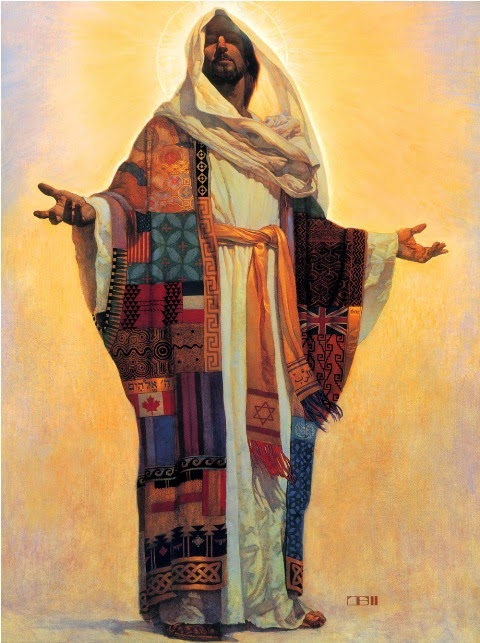
Joseph and his Coat

Campbell’s description, is Joseph an epic hero? Explain, using
quotes from the Biblical text. (Remember that, for Campbell, an
epic hero doesn’t have to fit every single one of these stages, just
most of them.) What epic things does Joseph accomplish? How
many lives are affected by his behavior and his choices? Think
about Aristotle’s telos here. In Egypt, Joseph seems to be a “trust
magnet.” Is this ability to attract trust a gift from God? How does
Joseph use his gifts? Include an mage of Joseph from The

Amazing Technicolor Dreamcoat.
Remember that, for Campbell, an epic hero doesn't have to fit every single one of these stages, just most of them. That means, any hero doesn't have a standard path, different hero have different epic in these stages. people can not follow their path, and also hero can not copy at all. But, when we compare all epic hero, we can find out one characters that is all hero have different aspects. The hero begins in the ordinary world, and receives a call to enter an unknown world of strange powers and events. The hero who accepts the call to enter this unknown world must face tasks and trials.In the most intense versions of the narrative, the hero must survive a severe challenge, often with help. If the hero survives, he may achieve a great gift. The hero must then decide whether to return to the ordinary world with this gift. If the hero does decide to return, he or she often faces challenges on the return journey. I do believe that Joseph is an epic hero. I believe this because Joseph died for his family. This makes an epic hero in my mind when you are willing to sacrifice your life for someone else or something else to help other people down then road.


Wednesday, January 28, 2015

Gilgamesh and Genesis The Great Flood Stories, Also Gilgamesh compared to other Epics.

Gilgamesh and the Genesis The Great Flood Stories. 

     If you notice that the stories are both talk about the great flood. There are different in many ways. Lets start with Gilgamesh's portray on the great flood. The flood was announced to utnapishtim in his dreams. There were seven stories of the boat also in this version. The shape of the boat was cubed. Utnapishtim was allowed to take his family and a few others. There was only heavy rain. The flood only lasted six short days. There were a dove, a swallow and a raven on board. The arks landing spot was Mount. Nisir. The cause of the flood was Man's Sins. The sender was the assembly of "gods".


    Now lets talk about the Genesis version of the story. In the Genesis it is said that the flood was announced to Noah by God himself. There were also only three stories on the boat. the shape of the boat was oblong box. Noah also did not complain when he was told to build the boat. Noah was only allowed to take his family. There was water coming from underground and from heavy rain. The flood lasts for 40 days and nights.The arks landing spot in this version was the mountains of Ararat. The cause of the flood was man's wickedness. The sender of the flood was Yahweh. The boat only carried a raven and three doves.

    The common things between the two stories are the flood was global. They both were ordered to build a boat. The boats had many compartments inside,one window and one door. The outside coating of the boat was pitch. They both released birds to find land. They both sacrificed after the flood and blessed after the flood.
here is a musical song that describes noahs ark in its context of music

The comparison of Gilgamesh and The Other Epics. 
(this is about the relationship of the gods and the protagonist.)

   I believe in all the epic poems the gods have a real close relationship with the protagonist. The gods either meet up with them at some point in the story to help them or to lead them a stray. In the odyssey the gods help  odysseus at one point but when he doesn't repay them with respect he gets turned on. One Example is when Poseidon helps him stay hidden in the horse and when he odysseus gets back to the see poseidon will not let him return home because of not thanking him for the help he had gotten from a god.  In the Illiad Achilles gets help from the gods to know how and when to beat hector.  The gods in  Gilgamesh help him by getting him together with his true love but then his true love gets taken away from in his future.